AI voice technology customer service solutions help enterprises resolve routine phone requests through spoken conversations and approved system actions. The operational challenge is making those conversations produce verified outcomes while protecting customer information and preserving access to human support.
Botworks AI voice technology helps enterprises handle customer calls, resolve routine requests, and connect customers with a person when needed. Voice agents can work with existing systems to retrieve information and complete approved tasks, helping service teams respond efficiently as call volumes grow.
How Can AI Voice Improve Customer Service?
A useful voice agent does more than sound natural. It needs to understand the caller, verify relevant information, take an approved action, and confirm the outcome. The Voice AI customer experience guide explores how these steps shape a customer’s interaction.
Talk to a Voice AI ExpertWhat is AI Voice Technology?
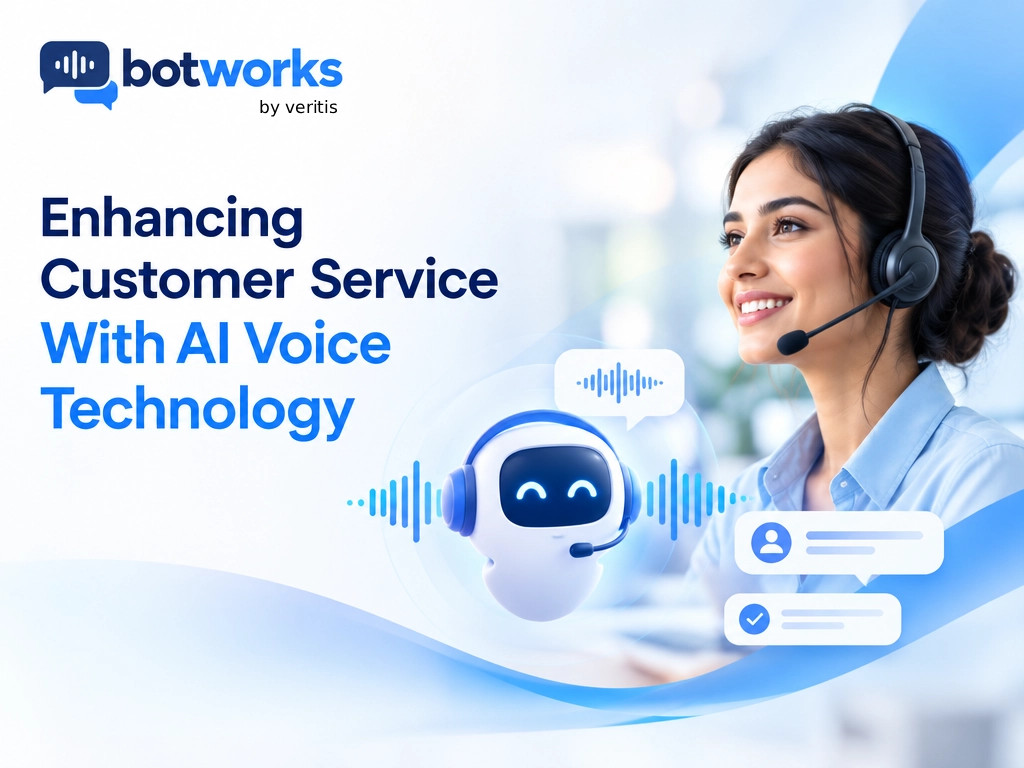
AI voice technology enables a system to listen to spoken requests, interpret what the caller needs, and respond with generated speech. In customer service, it can also connect to business systems to retrieve information or complete approved tasks.
Speech generation alone does not resolve a customer issue. The voice agent needs access to approved information, clear permissions, identity checks where required, and a path to human assistance.
How Does Voice AI Differ From Traditional IVR?
Traditional interactive voice response, or IVR, typically directs callers through menus or predefined prompts. Conversational voice AI can interpret requests expressed in everyday language, ask clarifying questions, and use context to select an approved workflow.
The distinction is not simply a more natural voice. A menu may route an appointment request; an integrated voice agent can check availability, submit an authorized booking, and confirm the result. Enterprises should evaluate the completed task rather than the quality of the conversation alone.
What Can Enterprise Voice Agents Do?
BotWorks AI voice technology offers a wide range of capabilities:
- Order Handling and FAQ Resolution: Efficiently automate routine inquiries, reducing the need for manual intervention.
- Sales Support: Provide immediate assistance, qualify leads, and support sales operations effectively.
- Appointment Scheduling: Simplify and expedite scheduling tasks for a streamlined customer experience.
- Natural Conversational Flow: Engage with customers in real time, respond to interruptions, and keep conversations moving.
For example, an appointment request should lead to a confirmed booking, not only an explanation of how scheduling works. An order inquiry may require retrieving current order details before responding.
Define exceptions alongside each use case. A routine order status inquiry may be suitable for automation, while a disputed charge or policy exception may require a person. Clear boundaries protect customers and prevent unsupported promises.
Explore AI Voice Agents for Customer Service to learn more about Botworks voice capabilities.
How Do AI Voice Technology Customer Service Solutions Work?
Botworks voice agents connect customer conversations with approved business workflows:
1) Understand the caller’s request and gather the context needed to respond.
2) Retrieve relevant information and complete tasks allowed by the business.
3) Escalate complex or sensitive requests to a human agent with relevant context.
4) Review interaction outcomes to identify service gaps and improvement opportunities.
What Happens During a Voice AI Interaction?
Speech recognition converts the caller’s words into text. The system interprets the request, applies the relevant workflow, and connects to approved business systems when information or an action is needed. It then turns the supported response into spoken audio.
Response time, interruption handling, and system integration all affect the customer experience. The agent should confirm that an action succeeded before telling the caller it is complete.
If a booking system times out, the agent should not announce a confirmed appointment. It should explain the uncertainty, check the transaction status where possible, and follow the approved recovery or escalation process.
How Should Enterprises Deploy AI Voice Safely?
Start with a clearly bounded workflow, an accountable business owner, and a documented definition of successful resolution. Connect only the systems and permissions needed for that task, such as approved access to customer records or appointment availability.
Test realistic calls before expanding access. Include background noise, accents, interruptions, ambiguous requests, unavailable systems, and callers asking for a person. Evaluate whether the agent recovers safely, not just whether it understands ideal speech.
Begin with a controlled pilot and review unresolved calls with service teams. Expand only when task completion, escalation quality, and customer outcomes meet the organization’s acceptance criteria. Maintain a fallback route when the voice service or a connected system is unavailable.
An AI readiness assessment can help teams organize prerequisites before choosing a pilot.
What Security and Data Controls Matter?
Customer voice interactions can contain sensitive information in audio, transcripts, summaries, and system logs. Establish what is collected, who can access it, where it is processed, and when it is deleted. Review recording notices, consent requirements, and contractual obligations for the relevant markets.
Require appropriate identity verification before disclosing account information or making changes. Keep authorization checks in the connected workflow rather than relying on conversational instructions alone. Ask vendors about recording redaction, audit trails, subcontractors, and whether customer data is used for model training.
How Should Enterprises Compare Voice AI Platforms?
Evaluate vendors against the same representative calls and approved workflows, not a scripted demonstration alone. Ask each provider to demonstrate:
- Integration with your customer records, telephony, and transaction systems.
- Permission enforcement, audit records, and recovery after a failed action.
- Human transfer with the request, verification status, and actions already attempted.
- Reporting that distinguishes completed tasks from abandoned or unresolved calls.
Compare pricing using expected call volumes, conversation duration, integration work, and ongoing support. A lower usage rate does not necessarily mean a lower cost per verified resolution.
Who Can Benefit From AI Voice Technology?
- Enhance operational efficiency by automating tasks and reducing manual workload.
- Improve customer satisfaction and engagement through reliable and responsive service.
- Scale operations effortlessly across global markets, ensuring consistent service quality.
AI voice technology is relevant to customer service and IT leaders looking to automate routine calls, improve responsiveness, and support higher call volumes. Before expanding across markets, enterprises should validate language coverage, local requirements, and service quality for each customer group.
How Can Enterprises Measure Business Impact?
Measure results against a baseline for the selected workflow. Useful measures include resolved calls, repeat contacts, customer satisfaction, escalation quality, and cost per resolved issue. Track failed actions as well as completed ones so automation does not hide unresolved requests.
Twilio’s cross channel research found that 86% of companies believed customers were satisfied with AI service, while 51% of consumers reported satisfactory interactions. This is not a voice only finding, but it reinforces the need to measure customer outcomes directly rather than infer satisfaction from adoption.
Count resolution only when the required system action is verified. Assess fully loaded cost, including telephony, integrations, monitoring, human escalations, and repeat contacts. Containment alone can reward keeping callers in automation even when their needs remain unresolved.
For a broader view of customer support across channels, read Chat and Voice AI Solutions.
Next Steps
Ready to explore AI voice for customer service? Talk to a Voice AI Expert about your workflows, system requirements, and customer support goals.
You can also learn how AI voice agents support sales operations.
The strongest starting point is a workflow with clear permissions, verifiable outcomes, and a dependable human fallback. Understand the customer, take the approved action, confirm resolution, and measure the result before expanding.
Optimize Voice AI TechnologyFrequently Asked Questions on AI Voice Technology
Can AI voice replace every customer service call?
No. AI voice can handle defined, repeatable workflows. Sensitive exceptions, unresolved requests, and situations requiring human judgment should have clear escalation paths.
How should enterprises measure AI voice performance?
Measure resolved calls, repeat contacts, customer satisfaction, escalation quality, and cost per resolved issue. Compare results with a baseline and include failed or incomplete actions in the review.
How can enterprises protect customer information?
Use appropriate identity checks, limit system access to approved tasks, and establish data retention and audit controls. Review applicable legal and contractual requirements before processing sensitive information.
What should happen when a voice agent cannot resolve a request?
The agent should explain that it needs help and route the interaction to a person. The handoff should include the caller’s request and relevant details so the customer does not have to repeat the full conversation.