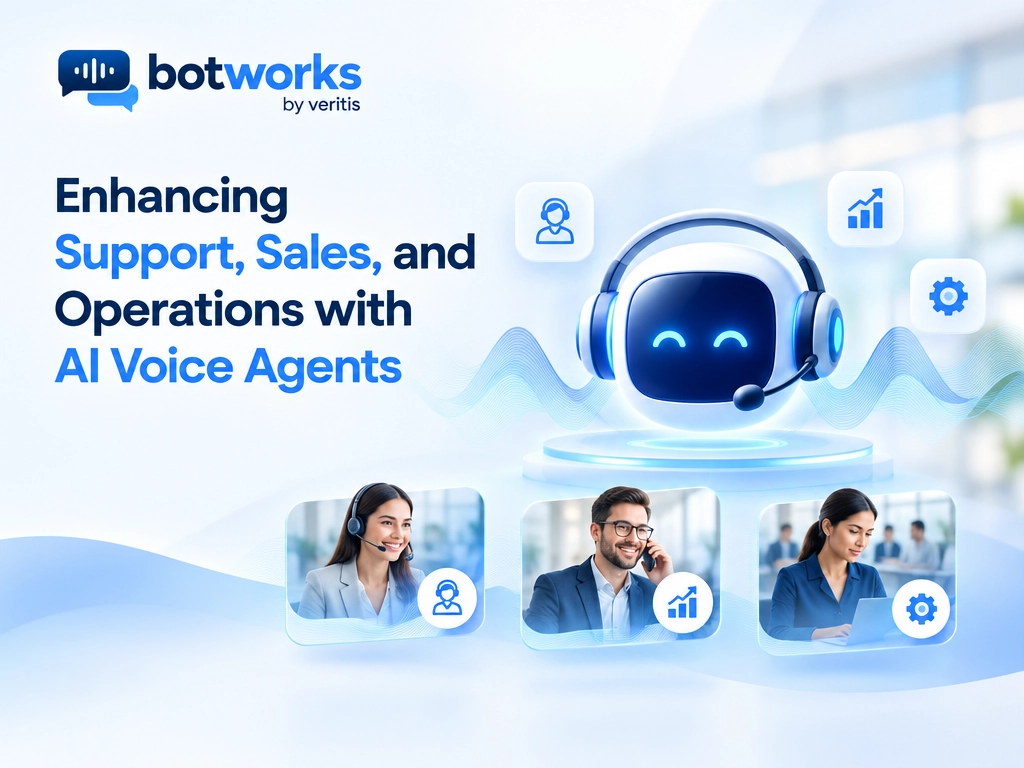
AI voice agents are transforming customer service by automating interactions and improving efficiency. This guide explores AI voice agents’ capabilities, advancements, real world applications, challenges, and strategies for effective deployment.
What Are AI Voice Agents?
AI voice agents are intelligent software systems designed to handle phone tasks using natural language processing (NLP). These agents can answer queries, process sales calls, and manage support tickets, ensuring efficient and effective customer service.
Get Started with AI Voice AgentsWhat Are the Key Capabilities of AI Voice Agents?
- Natural Conversation: They interpret complex requests and engage in human like dialogue.
- Task Automation: AI voice agents autonomously manage tasks such as order processing and inquiry resolution.
- 24/7 Availability: They operate around the clock, providing consistent support to customers.
What Are the Recent Advancements in AI Voice Agents?
Recent advancements in AI voice technology are making customer interactions more natural, responsive, and automated. Modern AI voice agents can understand intent, maintain conversational context, integrate with enterprise systems, and transfer complex interactions to human agents when required.
Key Advancements Include:
1) Natural Voice Interactions
AI voice agents can support more conversational interactions by understanding context and responding in real time.
2) Intelligent Human Escalation
Advanced voice agents can recognize when human assistance is required and transfer the interaction while preserving relevant conversation context.
3) Multilingual Support
AI voice capabilities are expanding across languages, helping organizations serve customers across different regions and markets.
4) Enterprise System Integration
Voice agents can connect with CRM, customer service, scheduling, and other enterprise systems to complete actions during conversations.
5) Automated Customer Support
AI voice agents can manage routine inquiries, appointment requests, service questions, and other repetitive interactions, allowing human teams to focus on more complex needs.
6) Sales Automation
Botworks transforms sales interactions with AI voice agents that engage prospects, qualify leads, answer product inquiries, and automate follow ups. By connecting conversations with enterprise workflows and seamlessly transferring qualified opportunities to sales teams, Botworks helps businesses accelerate lead engagement, reduce manual effort, and improve sales productivity.
How Are AI Voice Agents Used in Real World Implementations?
AI voice agents are being deployed across industries to automate high volume conversations, improve response times, and provide consistent customer support.
1) Healthcare & Telemedicine
Healthcare organizations use AI voice agents to manage appointment requests, patient inquiries, reminders, and after hours support while routing sensitive or complex cases to staff.
2) Customer Service
Contact centers use AI voice agents to answer routine questions, manage repetitive requests, and intelligently escalate conversations that require human assistance. Explore the differences and benefits of AI Agents Vs Chatbots.
3) Automotive
Automotive businesses can benefit from automotive voice AI, which handles service inquiries, schedules appointments, follows up with customers, and manages other high volume interactions.
4) HR & Recruitment
In HR, AI voice agents save hundreds of hours in screening by handling initial candidate interactions and interviews, streamlining recruitment operations.
5) Real Estate
Real estate agencies use AI voice agents to manage inquiries and client interactions, leading to a reported 20 to 30% increase in closed deals.
6) After Hours Support
Organizations use AI voice agents to provide continuous assistance outside regular business hours, helping customers receive timely responses without depending entirely on live agent availability.
Botworks enables enterprises to apply these AI voice capabilities across customer interactions, integrate with existing workflows, and support seamless human escalation when needed.
What Challenges Exist in Deploying AI Voice Agents?
Deploying AI voice agents involves overcoming several challenges:
1) Regulatory and Legal Compliance
Compliance with regulations like TCPA and GDPR is essential, requiring AI agents to disclose their non human nature and manage data protection responsibly.
2) Technical Challenges
AI voice agents must address latency, accent recognition, and conversational flow issues to avoid disrupting the customer experience.
3) Customer Experience Concerns
Maintaining human like interaction quality is crucial to prevent the “robotic trap” during sensitive customer interactions.
What Are the Strategies for Effective AI Voice Agent Deployment?
Implementing the following strategies can help overcome deployment challenges:
1) Prioritize Inbound Calls: Managing inbound calls can reduce legal complexities compared to outbound campaigns.
2) Implement Stringent Policies: Harden policy engines to prevent errors and manage sensitive data.
3) Facilitate Seamless Human Integration: Enable quick human intervention when AI systems encounter challenges.
4) Ensure Compliance: Educate teams on regulatory requirements to ensure agents adhere to all legal standards.
Conclusion
Despite their challenges, AI voice agents offer significant benefits when effectively deployed. They enhance operational efficiency and customer satisfaction. Successful implementations have shown positive impacts on sales growth and productivity, particularly in top of funnel tasks. Contact Botworks for a consultation to discover how AI voice agents can be crafted to your enterprise needs.
Ready to Hire AI Workforces for Your Business?
As AI voice agents evolve, many enterprises are set to integrate them into their operations. Current research shows 55% of enterprises use AI voice agents, with 92% planning to do so in the next two years. Secure, intelligent operations ensure smoother transitions and better outcomes.
Exploring Enterprise Voice Integrations
BotWorks supports integrations across various enterprise systems, enabling AI powered intelligent automation to execute approved customer service actions. Our solutions ensure seamless operations and measurable outcomes.
Improve Customer Support with AIFAQ’s on AI Voice Agents
What is the main function of AI voice agents?
AI voice agents primarily automate phone interactions, handling customer queries and support tasks using natural language processing.
How do AI voice agents improve customer service?
They provide 24/7 support, handle complex tasks autonomously, and enhance customer satisfaction and operational efficiency.
What industries benefit most from AI voice agents?
Industries like retail, healthcare, and hospitality benefit from improved interaction management and operational workflows with AI voice agents.
What are the common challenges in deploying AI voice agents?
Challenges include complying with regulations, managing technical issues like latency, and ensuring quality human like interactions.
How can businesses deploy AI voice agents effectively?
Businesses should focus on inbound call management, implement robust policy engines, ensure smooth human integration, and adhere strictly to compliance standards.