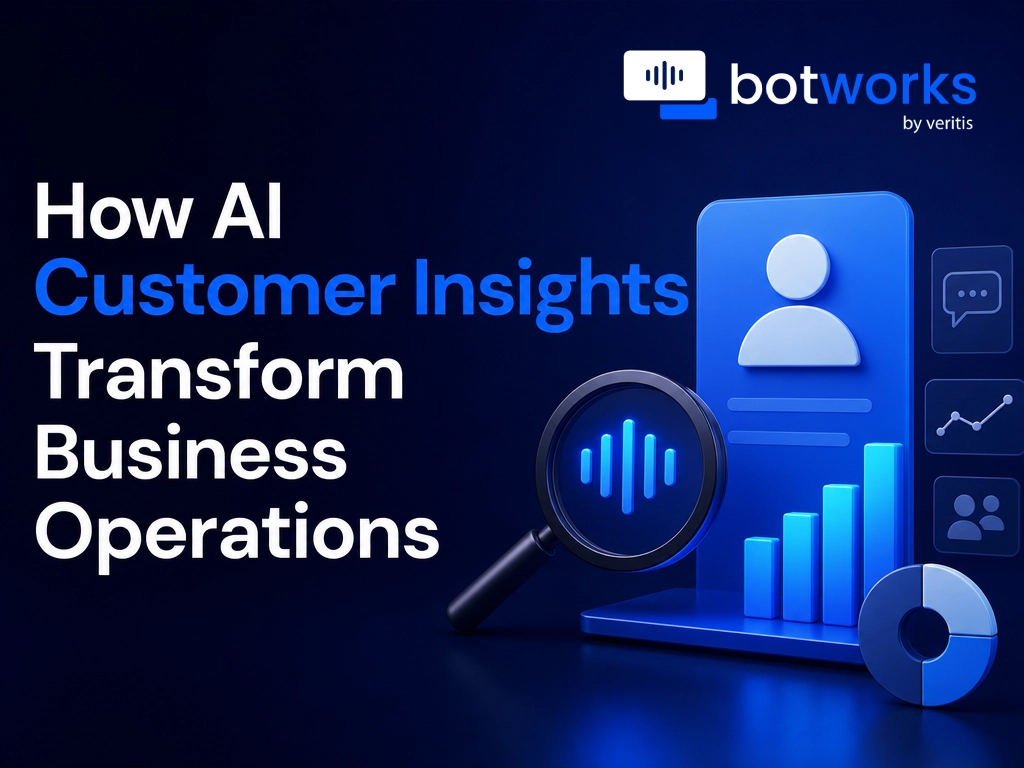
Customer interactions generate valuable information about needs, preferences, expectations, and service challenges. AI customer insights help organizations turn this information into actionable intelligence that improves customer service, operational efficiency, personalization, and business decision making.
By combining customer data with machine learning, predictive analytics, and Natural Language Processing, enterprises can identify patterns that may be difficult to uncover through traditional analysis. The following steps explain how businesses can build a structured approach to AI driven customer insights.
What Are AI Customer Insights?
AI customer insights are findings generated by analyzing customer interactions and behavioral data using artificial intelligence. These insights help organizations understand what customers need, how they behave, where service problems occur, and which actions may improve their experience.
Instead of relying only on historical reports, AI enables businesses to identify patterns, analyze large volumes of information, and anticipate potential customer needs.
Transform Customer Operations with AIWhat Do Businesses Need Before Using AI Customer Insights?
A successful approach begins with the right foundation. Organizations should have:
- Reliable customer interaction data
- Access to appropriate AI and analytics technologies
- Clearly defined business objectives
- Data governance and security controls
- Teams capable of interpreting and applying insights
The quality of the underlying data matters because fragmented or erroneous data can compromise the reliability of AI generated insights.
How Can Businesses Generate AI Customer Insights?
1) Collect and Organize Customer Data
Bring together relevant information from channels such as chat, voice calls, email, surveys, customer service platforms, and digital interactions.
Organizing this information creates a stronger data foundation and helps AI systems analyze customer journeys more effectively.
2) Identify Patterns With Machine Learning
Machine learning can analyze large datasets to uncover recurring behaviors, service patterns, preferences, and emerging trends.
Organizations can use these findings to understand customer segments better, identify common service issues, and spot opportunities to improve engagement.
3) Anticipate Customer Needs With Predictive Analytics
Predictive analytics uses existing customer information to estimate possible future behaviors and requirements.
Businesses can apply these insights to:
- Identify customers who may require assistance
- Anticipate recurring service issues
- Improve customer segmentation
- Personalize recommendations
- Prioritize customer service activities
This allows organizations to become more proactive in how they engage customers.
4) Understand Conversations With NLP
Natural Language Processing helps AI systems interpret unstructured customer communication.
By analyzing chats, calls, emails, and feedback, NLP can identify:
- Customer intent
- Common questions
- Sentiment
- Recurring concerns
- Frequently discussed topics
These insights help organizations understand what customers are actually saying and where improvements may be required.
5) Convert Insights Into Business Action
Customer intelligence creates value only when organizations act on it.
AI generated insights can support decisions across areas such as customer service, personalization, product development, marketing, and operational planning.
For example, repeated customer questions may reveal a knowledge gap, while recurring complaints may highlight a service process that requires improvement.
How Can Organizations Improve the Quality of AI Customer Insights?
Businesses should follow several practices to ensure insights remain useful and reliable:
- Set Clear Objectives: Define the business questions AI analysis should answer.
- Maintain Data Quality: Keep customer information accurate, relevant, and consistent.
- Validate Insights: Compare AI findings with actual customer behavior and business outcomes.
- Protect Customer Data: Apply appropriate privacy, security, and governance controls.
- Continuously Refine Models: Update AI systems as customer behavior and business conditions evolve.
- Measure Business Impact: Track whether insights contribute to improved service, efficiency, retention, or other defined outcomes.
What Business Value Can AI Customer Insights Deliver?
When implemented effectively, AI customer insights can help enterprises improve:
- Customer understanding
- Personalization
- Service efficiency
- Customer satisfaction
- Proactive support
- Operational decision making
- Customer retention
- Strategic planning
The broader opportunity is to transform customer interaction data from a historical record into an intelligence source that continuously informs business decisions.
Conclusion
Harnessing AI to transform customer data into strategic advantages allows businesses to personalize interactions and enhance customer service effectively. Explore BotWorks Voice – AI Voice Agents for Customer Support to discover how AI can optimize your operational efficiency.
Explore AI Customer OperationsFAQs: AI Customer Operations
How does AI enhance customer service personalization?
AI enhances personalization by analyzing data to tailor recommendations, increasing satisfaction and engagement.
What benefits does NLP provide in customer insights?
NLP allows AI systems to interpret language, extracting sentiments and themes to transform unstructured data into actionable insights.
Why is predictive analytics important?
Predictive analytics anticipates customer behavior based on historical trends, enabling proactive service enhancement.
How can AI derived insights improve enterprise operations?
AI derived insights streamline decision making and improve service efficiency by providing actionable data on customer needs and behaviors.