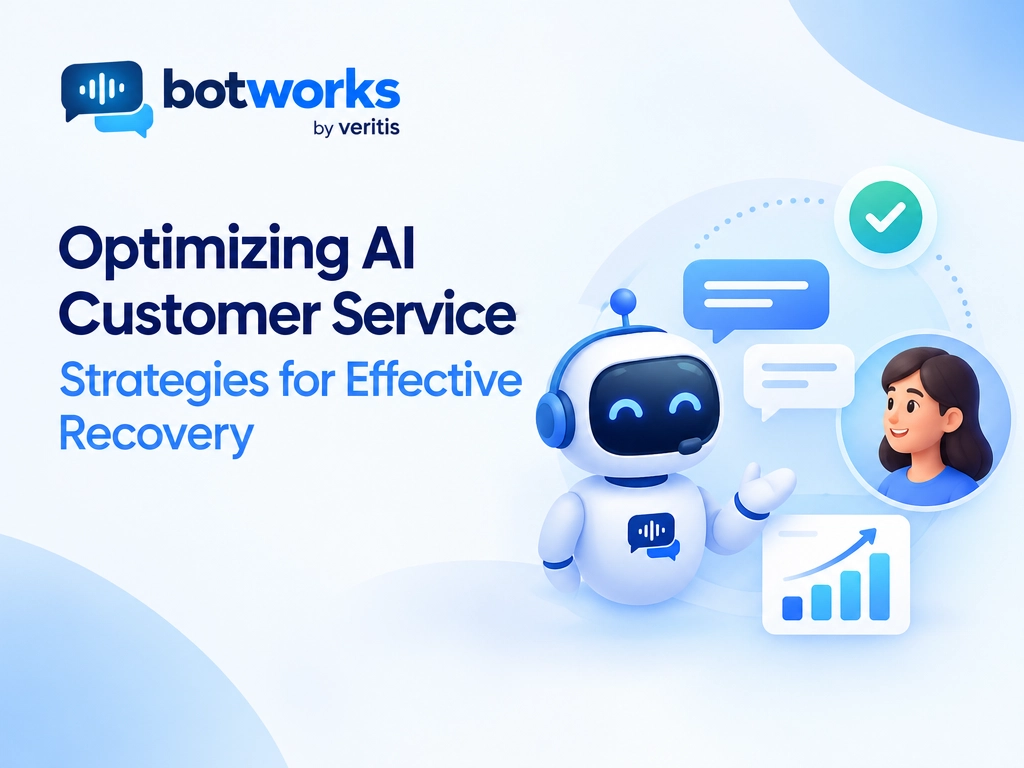
AI customer service is revolutionizing customer interactions by delivering efficient, impactful support. Despite these advances, AI systems can still fail in ways that affect customer satisfaction. This guide examines methods to optimize AI recovery when failures occur, focusing on escalation strategies, incident management, and maintaining trust and efficiency in AI driven customer service.
Transform Customer Service with AIHow Does AI Customer Service Work?
AI customer service applies artificial intelligence to streamline customer interactions and enhance support delivery. By using technologies such as ML and natural language processing, it can interpret customer inquiries and provide relevant responses.
How Do AI and Human Agent Escalation Work Together?
Seamless integration of AI with human agents is critical for effective recovery from AI failures. Efficient escalation methods restore customer satisfaction. Recent studies identify four primary methods for escalation:
- Passive: A human agent intervenes only at the customer’s request.
- Text prompt: Customers type a request for human assistance.
- Button prompt: Provides an option for a quick button click to escalate.
- Automatic: Automatically transfers to a human without customer action.
Each method significantly influences customer perceptions of the recovery process and helps enhance customer experiences.
What Are Effective Service Recovery Explanations by AI?
AI agents should offer clear, logical explanations when failures arise. Studies show that specific rationales rebuild customer trust more effectively than general excuses. “Explainable AI” (XAI) communicates the reasoning behind mistakes, aligns with enterprise intentions, and supports transparency. It mitigates perceived negligence by presenting structured logic rather than excuses.
Why Are Governance Mechanisms Important to Preserve Trust?
Governance is crucial in maintaining trust during AI failures. Studies claim that lacking governance can lead to harsh negligence attributions. Mechanisms such as human in the loop interventions and explainable algorithms help ensure trust.
How Does Production Monitoring Ensure Timely Recovery?
Real time production monitoring enables timely interventions when AI fails. Observability tools prevent silent failures from propagating, while post incident analysis refines systems to avoid future issues. Partners like Botworks offer overlays to detect real time misalignments for prompt interventions.
What Are Common AI Failure Modes and the Post Execution Layer?
Common AI failure modes include inaccurate responses, loops, hallucinations, context loss, and emotional mismanagement. Designing post execution layers helps human agents receive full context and interaction history, aiding recovery efforts and maintaining a streamlined customer experience.
The Shift to Outcome Oriented AI Systems
The industry is witnessing a shift from standalone chatbots to agentic, outcome oriented AI systems that automate significant workflows. For example, Botworks’ AI Agents now automate 80% of workflows, enabling more effective and efficient customer service operations.
Adoption of Outcome Based Pricing Models
There is a growing trend toward outcome based pricing models, such as “pay per resolution” strategies, reflecting the effectiveness of customer service solutions. This approach aligns costs with verified resolutions rather than merely processing a high volume of interactions, offering a more transparent pricing structure.
Resurgence of Voice AI
Recent data shows a resurgence of voice AI, with 71% of Gen Z preferring live support. This highlights the importance of emotional context in interactions, particularly as AI systems strive to offer more engaging and empathetic customer experiences.
Challenges in Trust and Governance
Despite advancements in AI customer service, challenges concerning trust and governance remain pivotal. About 74% of organizations have rolled back AI tools due to trust failures, underscoring the necessity of human oversight in AI deployments for effective service recovery.
How Do AI Systems Manage State Loss and Context Drift?
AI systems manage state loss and context drift by maintaining interaction continuity and relevance. Practices such as continuous context logging and review promote seamless transitions and uphold service consistency.
Conclusion
Recovering from AI failures goes beyond fixing errors; it involves evolving customer service processes to be more resilient and trustworthy. This requires strategies such as proactive human escalation, clear service explanations, comprehensive incident management, robust technical design, and strong governance frameworks. These measures enable AI customer service to deliver consistent, efficient support while strengthening customer confidence and satisfaction.
For enterprises aiming to enhance their AI customer service capabilities, consider scheduling a consultation with BotWorks to discover solutions tailored to your business needs. Contact us now to create a scalable, secure, and efficient customer service operation.
Get Started with AI Customer ServiceFAQ’s on AI Customer Service
What is AI customer service?
AI customer service uses AI to automate tasks and improve interaction quality, providing efficient support and enhanced service.
How can AI failures affect customer satisfaction?
AI failures can lead to incorrect responses or processes, potentially causing customer frustration or dissatisfaction if not effectively addressed.
What is outcome based pricing in AI services?
Outcome based pricing models, such as “pay per resolution,” align costs with the effectiveness of customer service solutions, offering transparency and efficiency.
Why is explainable AI important?
Explainable AI (XAI) provides logical explanations for AI decisions, building customer trust through transparency and accountability.
How do AI and human agents work together in customer service?
AI and human agents collaborate through escalation methods to address issues promptly and deliver satisfactory customer service resolutions.